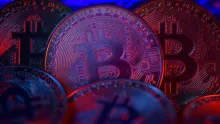
Bitcoin’s evolution from a fringe digital experiment into a globally recognized financial asset has accelerated dramatically as institutional investors, corporations and asset managers deepen their exposure to cryptocurrency markets. Large-scale capital inflows, the expansion of regulated investment products and improving regulatory clarity have transformed Bitcoin into a strategic portfolio asset rather than a speculative novelty.
The rivalry between Bitcoin and Ethereum remains one of the defining stories of the cryptocurrency industry in 2026. While both assets dominate the digital economy, they represent fundamentally different visions for the future of blockchain technology.
Bitcoin is primarily viewed as a decentralized store of value and monetary asset, while Ethereum has evolved into a programmable financial and application infrastructure powering much of the decentralized internet.
Polkadot has emerged as one of the most ambitious blockchain projects focused on interoperability and multi-chain connectivity. In 2026, the network continues to position itself as critical infrastructure for a fragmented digital asset economy, enabling different blockchains to communicate and share data efficiently. Unlike standalone blockchain systems, Polkadot aims to create an interconnected ecosystem where specialized chains operate together under a unified security framework. Its architecture supports scalability, flexibility, and cross-chain innovation.
Litecoin remains one of the oldest and most recognized cryptocurrencies in the digital asset market. Often referred to as the “silver to Bitcoin’s gold,” Litecoin was designed to offer faster transaction speeds and lower fees compared to Bitcoin. In 2026, it continues to maintain relevance through its stability, strong liquidity, and established payment infrastructure. Although newer blockchain projects have introduced advanced smart contract capabilities, Litecoin’s simplicity and reliability continue to attract long-term users and payment-focused investors.
XRP has positioned itself as a specialized digital asset designed for fast, low-cost international money transfers. In 2026, it continues to play a significant role in the evolving global payments infrastructure, particularly among financial institutions and remittance networks. Unlike speculative cryptocurrencies, XRP focuses on utility-driven adoption within banking systems and cross-border settlement frameworks. Its primary value proposition lies in reducing transaction friction and settlement delays in traditional financial corridors.
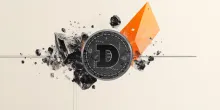
Dogecoin remains one of the most unconventional digital assets in the cryptocurrency ecosystem, shaped more by community sentiment than traditional financial fundamentals. Originally launched as a lighthearted alternative to Bitcoin, it has evolved into a globally recognized asset driven by social media influence, retail participation, and cultural momentum. In 2026, Dogecoin continues to experience high volatility, with price movements heavily influenced by online trends rather than institutional adoption.
Ethereum has emerged as the foundational blockchain for decentralized applications, smart contracts, and Web3 innovation. In 2026, it continues to dominate as the most widely used programmable blockchain, supporting decentralized finance (DeFi), NFTs, and enterprise-grade applications. Its adaptability and large developer ecosystem make it central to the evolution of digital infrastructure. While scalability and transaction costs were once major concerns, continuous upgrades and layer-two solutions have significantly improved performance.
Bitcoin has evolved into the most dominant and institutionally recognized digital asset in the global financial system. Once considered a speculative experiment, it is now widely treated as a decentralized store of value often compared to digital gold. In 2026, Bitcoin continues to attract hedge funds, corporate treasuries, and long-term investors seeking protection against inflation and currency depreciation. Despite volatility and regulatory debates, its fixed supply and secure blockchain architecture reinforce its scarcity-driven valuation model.
The cryptocurrency market in 2026 continues to be defined by three distinct digital assets: Bitcoin, Solana, and Dogecoin. Bitcoin remains the dominant store of value and institutional benchmark, often compared to digital gold. Solana has emerged as a high-performance blockchain focused on scalability, decentralized applications, and transaction speed, attracting developers and institutional interest. Meanwhile, Dogecoin persists as a community-driven digital asset influenced heavily by social sentiment and retail speculation.