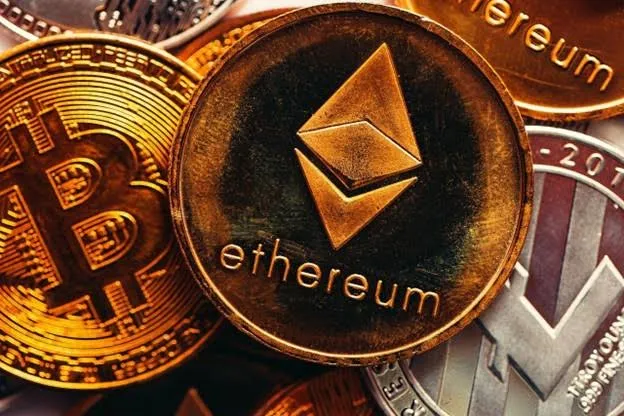
The rivalry between Bitcoin and Ethereum remains one of the defining stories of the cryptocurrency industry in 2026. While both assets dominate the digital economy, they represent fundamentally different visions for the future of blockchain technology.
Bitcoin is primarily viewed as a decentralized store of value and monetary asset, while Ethereum has evolved into a programmable financial and application infrastructure powering much of the decentralized internet.
Understanding the differences between the two is essential for investors, developers, and anyone following the evolution of digital finance.
Bitcoin: The Digital Gold Narrative
Bitcoin was introduced in 2009 as the world’s first decentralized cryptocurrency. Its core philosophy centers around scarcity, security, and independence from traditional financial systems.
Key characteristics of Bitcoin include:
Fixed supply capped at 21 million coins
Decentralized peer-to-peer architecture
Strong security through proof-of-work mining
Growing institutional adoption
Reputation as “digital gold”
In 2026, Bitcoin continues to dominate global crypto markets in terms of recognition, market influence, and institutional legitimacy.
Large financial firms, hedge funds, and even some governments increasingly treat Bitcoin as a long-term reserve asset rather than merely a speculative token.
Ethereum: The Smart Contract Giant
Ethereum was created to expand blockchain technology beyond simple financial transfers.
Unlike Bitcoin, Ethereum enables programmable smart contracts—self-executing applications running directly on blockchain infrastructure.
This capability has made Ethereum central to:
Decentralized finance (DeFi)
NFT ecosystems
Blockchain gaming
Web3 applications
Tokenized digital assets
Decentralized autonomous organizations (DAOs)
Ethereum’s broader functionality has helped it become the foundation of much of the modern blockchain economy.
Technology Differences
The two networks differ significantly in technical design and purpose.
Bitcoin
Primarily optimized for security and decentralization
Slower transaction speeds but highly stable architecture
Focused on preserving monetary value
Ethereum
Designed for programmability and application development
Supports complex decentralized ecosystems
Faster innovation cycles and broader functionality
Bitcoin prioritizes reliability and scarcity.
Ethereum prioritizes flexibility and utility.
Institutional Investment Trends
Institutional investors increasingly treat Bitcoin and Ethereum differently.
Bitcoin is commonly viewed as:
A macroeconomic hedge
Inflation protection asset
Long-term treasury reserve
Ethereum, meanwhile, is often viewed as:
A technology infrastructure investment
Exposure to blockchain innovation
A growth-oriented digital asset
This distinction shapes how large investors allocate capital within crypto markets.
Scalability and Transaction Costs
Ethereum has historically faced criticism for network congestion and high transaction fees during periods of heavy demand.
To address this, the Ethereum ecosystem has expanded through:
Layer-2 scaling solutions
Rollup technologies
Faster validation systems
Ongoing protocol upgrades
Bitcoin, meanwhile, maintains a more conservative development philosophy focused on network stability and security.
Energy Consumption Debate
Bitcoin’s proof-of-work mining system continues to attract environmental criticism due to its large energy requirements.
Ethereum significantly reduced its energy consumption after transitioning to proof-of-stake validation, making it more appealing to environmentally conscious investors and institutions.
This environmental distinction has become increasingly important in regulatory and ESG investment discussions.
Market Volatility and Risk
Both Bitcoin and Ethereum remain highly volatile compared to traditional financial assets.
Key risks include:
Regulatory uncertainty
Market speculation
Security vulnerabilities
Macroeconomic shifts
Technological competition
However, despite repeated market crashes, both assets have maintained dominant positions within the cryptocurrency ecosystem.
Which Has More Long-Term Potential?
The debate between Bitcoin and Ethereum ultimately depends on what users and investors believe blockchain technology should become.
Supporters of Bitcoin argue:
Scarcity creates long-term value
Simplicity increases security
Monetary independence is the primary innovation
Supporters of Ethereum argue:
Blockchain utility matters more than scarcity
Smart contracts unlock entire digital economies
Decentralized applications represent the future of the internet
Both narratives continue to attract massive global support.
The Future of the Crypto Industry
Rather than replacing one another, Bitcoin and Ethereum increasingly appear to serve different roles within the digital economy.
Bitcoin dominates as a decentralized monetary asset.
Ethereum dominates as programmable blockchain infrastructure.
Together, they form the foundation of much of the modern cryptocurrency ecosystem, influencing everything from global finance and digital payments to gaming, AI integration, and decentralized internet development.
Comments