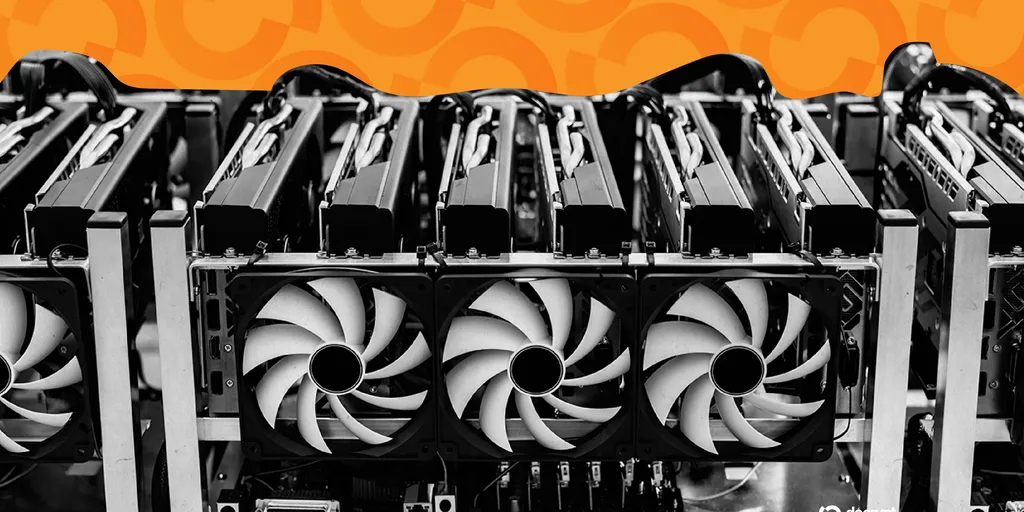
Bitcoin mining companies are rapidly evolving beyond cryptocurrency production and emerging as critical infrastructure providers for the fast-growing artificial intelligence industry. According to a new analysis by Bernstein, miners are leveraging their extensive power assets, operational expertise, and ready-to-deploy facilities to address one of AI's biggest challenges: access to large-scale computing infrastructure. The transformation is already reshaping the sector, with mining firms securing major partnerships with technology giants and hyperscale data center operators. Analysts project that AI-related revenue generated by leading Bitcoin miners could increase nearly ninefold by 2030, marking a fundamental shift in the industry's long-term business model.
Bitcoin Mining Industry Finds a New Growth Engine
The Bitcoin mining sector is undergoing a remarkable transformation as companies increasingly position themselves at the center of the artificial intelligence revolution.
For years, cryptocurrency miners were primarily viewed as businesses dependent on Bitcoin prices and mining rewards. Today, however, a growing number of operators are leveraging their energy infrastructure to serve the rapidly expanding demand for AI computing power.
Analysts at Bernstein believe this strategic evolution could significantly enhance the value proposition of several mining companies, turning them into key infrastructure providers for some of the world's largest technology firms.
The firm's latest assessment assigns "Outperform" ratings to mining operators TeraWulf and Cipher Digital, citing their growing role in supplying power and data center capacity to AI developers.
Why AI Needs Bitcoin Miners
The explosive growth of artificial intelligence has created an unprecedented demand for computational resources.
Training and operating advanced AI models requires vast amounts of electricity, sophisticated cooling systems, and large-scale data center facilities. While technology companies are investing aggressively in AI, securing adequate power infrastructure has become one of the industry's biggest bottlenecks.
This challenge presents a unique opportunity for Bitcoin miners.
Unlike many traditional infrastructure providers, miners already control significant energy assets and operate facilities specifically designed to support high-performance computing operations. Their expertise in managing energy-intensive environments gives them a competitive advantage in serving AI customers.
According to analysts, Bitcoin miners are increasingly acting as "power landlords," providing ready-to-use infrastructure that enables AI companies to deploy computing equipment quickly and efficiently.
Multi-Billion-Dollar Deals Reshape the Industry
The scale of this transformation is becoming increasingly evident.
Over the past two years, Bitcoin mining companies have reportedly participated in 17 major infrastructure agreements collectively valued at more than US$110 billion. These arrangements involve the allocation of approximately six gigawatts of power capacity to support AI-related operations.
Major technology companies, including Google, Amazon, Microsoft, Nvidia, and cloud computing provider CoreWeave, have emerged as key participants in this growing ecosystem.
Industry estimates suggest that these agreements now account for roughly 10% of all artificial intelligence data center projects currently under development across the United States.
The rapid expansion highlights the growing convergence between the cryptocurrency and artificial intelligence sectors, two industries that increasingly depend on large-scale computing infrastructure.
The Strategic Advantage of Existing Infrastructure
One of the most valuable assets held by Bitcoin miners is their existing infrastructure footprint.
Building new data centers from the ground up often requires years of planning, regulatory approvals, utility agreements, and construction. By contrast, many mining companies already possess operational facilities with active power connections and supporting infrastructure.
Bernstein describes these facilities as "warm powered shells"—sites where electricity, cooling systems, and operational frameworks are already in place, allowing AI operators to accelerate deployment timelines significantly.
This capability is particularly valuable in an environment where demand for AI computing capacity is growing faster than new infrastructure can be built.
The analysts argue that miners are uniquely positioned to solve what they describe as the industry's "time-to-compute" challenge, helping AI companies bring new computing capacity online more rapidly than traditional development models allow.
Revenue Outlook Points to Significant Expansion
The financial implications of this shift could be substantial.
Bernstein projects that the combined AI-related revenue generated by the companies under its coverage could rise from approximately US$1.2 billion in 2026 to US$10.7 billion by 2030.
This dramatic increase reflects both growing demand for AI infrastructure and the expanding participation of mining companies in the sector.
Among the firms highlighted, TeraWulf appears particularly well-positioned due to its collaboration with cloud infrastructure specialist Fluidstack and its association with Google-backed projects. Analysts forecast that TeraWulf's AI-focused business could generate approximately US$1.7 billion in annual revenue by 2030 while maintaining EBITDA margins approaching 84%.
Cipher Digital is also expected to benefit significantly from the trend. With a customer base heavily concentrated among hyperscale technology companies, the firm could generate around US$1.2 billion in AI-related revenue by the end of the decade.
These projections suggest that artificial intelligence may eventually become a more important earnings driver for some mining companies than cryptocurrency mining itself.
A Fundamental Shift Away From Bitcoin Dependence
The emergence of AI infrastructure as a major revenue source marks a significant strategic shift for the mining industry.
Historically, mining company valuations have been closely tied to Bitcoin price movements, network difficulty, and block reward economics. Such dependence often exposed investors to significant volatility and cyclical market risks.
Diversification into AI infrastructure offers a more stable and potentially higher-margin business model.
Long-term contracts with enterprise customers can provide predictable cash flows, while demand for AI computing appears poised to grow for years as businesses continue integrating artificial intelligence into products, services, and operations.
For investors, this transition may reduce reliance on cryptocurrency market cycles while creating exposure to one of the fastest-growing segments of the global technology industry.
The Convergence of Two High-Growth Industries
The growing relationship between Bitcoin mining and artificial intelligence reflects a broader trend reshaping the digital economy.
Both industries rely heavily on access to energy, computing resources, and specialized infrastructure. As AI adoption accelerates globally, the value of existing power-rich facilities is increasing dramatically.
What began as infrastructure built to support cryptocurrency networks is now being repurposed to fuel the next generation of AI innovation.
The result is a new business model that could redefine the future of Bitcoin mining. Rather than serving solely as producers of digital assets, miners are increasingly positioning themselves as critical infrastructure partners in the global race to develop advanced artificial intelligence technologies.
If current projections prove accurate, the industry's next growth chapter may be driven as much by AI demand as by the price of Bitcoin itself.
Comments