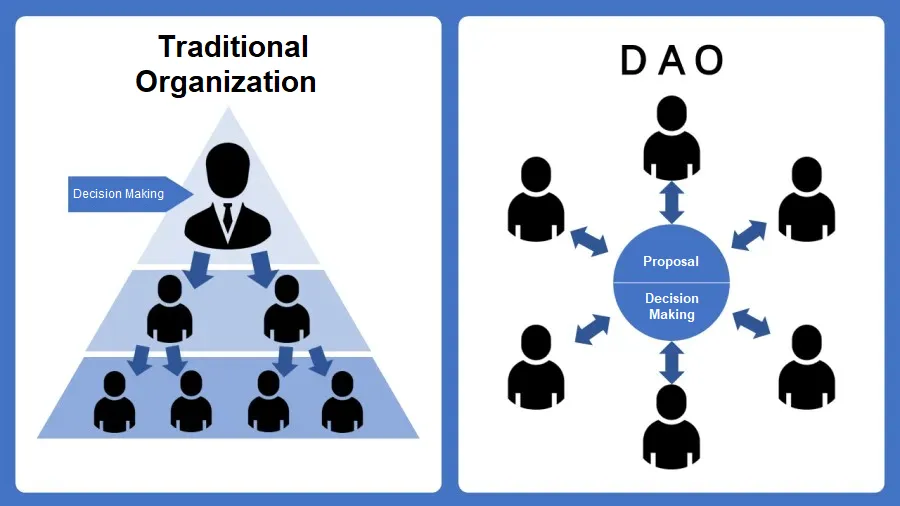
Decentralized Autonomous Organizations, commonly known as DAOs, are emerging as one of the most experimental and transformative concepts within the blockchain economy. Built on smart contract technology, DAOs allow communities to collectively manage projects, investments and digital ecosystems without centralized leadership structures. Crypto investors, developers and venture capital firms are increasingly exploring DAO models as alternatives to traditional corporate governance systems. While the sector continues to face legal uncertainty, coordination challenges and cybersecurity risks, supporters believe decentralized governance could fundamentally reshape how organizations operate, allocate capital and make decisions in the digital era.
A New Model for Organizational Governance
The rise of blockchain technology has introduced entirely new approaches to coordination and decision-making within digital communities. Among the most significant innovations is the development of Decentralized Autonomous Organizations.
Unlike traditional corporations managed by executives and boards of directors, DAOs operate through blockchain-based smart contracts and community voting systems. Members holding governance tokens can participate directly in decisions regarding project development, treasury allocation and operational strategies.
This structure is designed to reduce centralized control while increasing transparency and collective participation within organizations.
Supporters argue that DAOs represent a major shift toward internet-native governance systems capable of operating across borders without relying on conventional corporate frameworks.
Blockchain Communities Drive DAO Expansion
DAOs initially gained popularity within cryptocurrency communities managing decentralized finance projects and blockchain development initiatives. However, the concept has expanded rapidly into sectors including investment management, gaming, digital art and online social communities.
Some DAOs collectively manage investment funds, allowing token holders to vote on asset allocation and strategic decisions. Others oversee decentralized applications, virtual economies and blockchain infrastructure projects.
The flexibility of DAO structures has attracted strong interest from developers and entrepreneurs seeking alternatives to traditional organizational hierarchies.
Venture capital firms and institutional investors are also exploring DAO participation as decentralized governance models become increasingly influential within the digital asset industry.
Analysts believe DAOs may eventually play a larger role in coordinating global online communities and digital economic activity.
Transparency and Automation Attract Supporters
One of the primary advantages associated with DAOs is transparency. Because governance rules and treasury transactions are recorded on public blockchains, members can monitor organizational activity in real time.
Smart contracts also automate many administrative processes, reducing the need for intermediaries and manual oversight.
Supporters argue that this structure may improve accountability compared with traditional corporate systems where decision-making often occurs behind closed doors.
The global and decentralized nature of DAOs also allows individuals from different countries to collaborate within shared digital ecosystems without geographic restrictions.
This borderless participation model has become particularly attractive for technology-focused communities operating primarily online.
Legal and Security Challenges Persist
Despite rising interest, DAOs continue to face major operational and regulatory challenges. Legal systems in many countries still lack clear frameworks defining how decentralized organizations should be recognized, taxed or regulated.
Questions surrounding liability, governance accountability and securities compliance remain unresolved in several jurisdictions.
Cybersecurity risks also represent a serious concern. Vulnerabilities within smart contracts or governance systems can expose DAOs to financial losses and operational disruptions.
Some projects have experienced governance attacks in which large token holders exert disproportionate influence over organizational decisions, raising concerns about decentralization effectiveness.
Critics argue that while DAOs promote community participation, decision-making processes can become slow, fragmented and difficult to coordinate at scale.
Nevertheless, interest in decentralized governance continues growing as blockchain adoption expands globally.
As digital economies become increasingly interconnected, DAOs may evolve into influential organizational structures shaping the future of online collaboration, investment management and decentralized business operations.
Comments