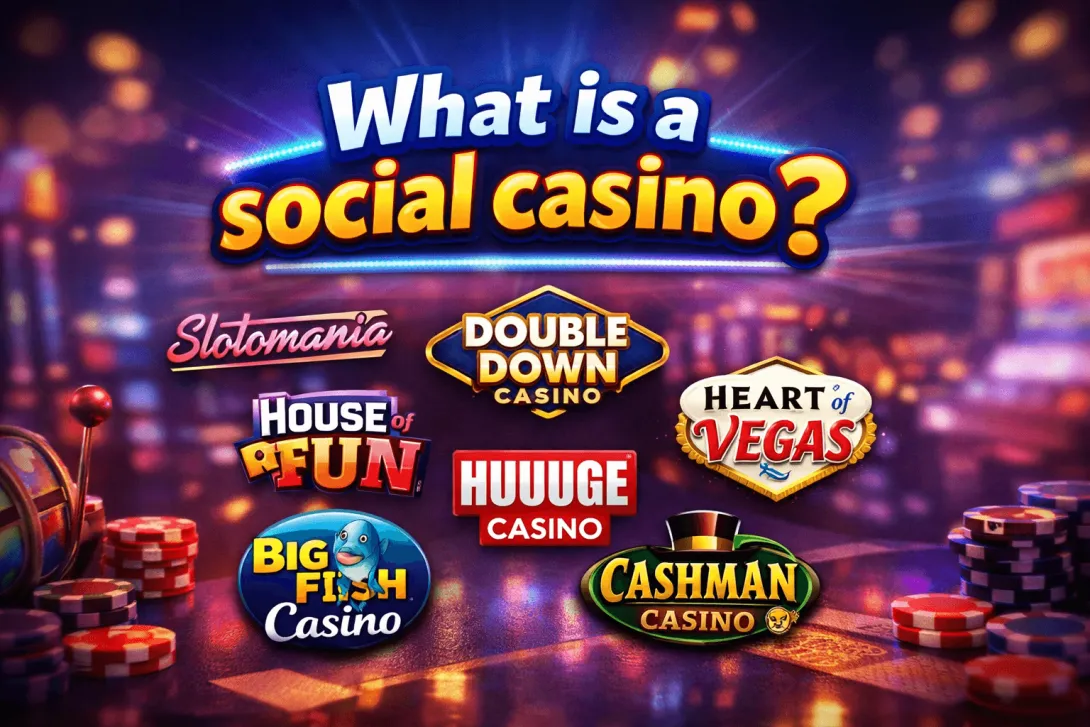
Social casinos have emerged as a powerful yet underappreciated segment within the broader iGaming industry, generating billions in revenue without offering real-money payouts. Built on virtual currencies and entertainment-driven engagement, these platforms replicate traditional casino experiences while eliminating financial risk for operators. Their profitability stems from high-margin digital transactions, scalable infrastructure, and behavioral monetization strategies. As regulatory pressures intensify in real-money gambling markets, social casinos present a compelling alternative with fewer compliance constraints. This article explores how the model works, why it is financially attractive, and what it signals about the evolving economics of digital gaming.
Understanding Social Casinos: A Distinct Business Model
Social casinos represent a unique category within the digital gaming ecosystem. Unlike traditional online casinos, these platforms do not involve real-money wagering or payouts. Instead, they operate using virtual currencies, allowing users to engage with games such as slots, blackjack, and poker purely for entertainment.
Players can purchase in-game credits with real money, but any winnings remain confined to the platform. This closed-loop economy fundamentally alters the financial dynamics of the business. Without the obligation to pay out winnings, operators can maintain significantly higher margins compared to conventional gambling platforms.
Why the Model Is Exceptionally Profitable
The financial appeal of social casinos lies in their structural simplicity and scalability. With no direct exposure to gambling losses or payout liabilities, operators retain a larger share of user spending.
Revenue is primarily driven by microtransactions—small, repeated purchases of virtual currency. These transactions, while individually modest, accumulate into substantial income streams due to high user engagement and retention rates.
Moreover, operational costs are relatively low. Digital infrastructure, once established, can scale globally with minimal incremental expense. This combination of high-margin revenue and low variable costs makes the model particularly attractive from a business standpoint.
Behavioral Economics and User Engagement
A critical driver of success in social casinos is the application of behavioral design principles. Platforms are engineered to maximize engagement through reward loops, progression systems, and social interaction.
Players are incentivized to continue playing through features such as:
Daily rewards and bonuses
Competitive leaderboards
Social sharing and multiplayer elements
Time-limited events and challenges
These mechanics create a compelling user experience that encourages frequent interaction, thereby increasing the likelihood of in-app purchases.
Regulatory Advantage and Market Expansion
One of the most significant advantages of social casinos is their regulatory positioning. Because they do not offer real-money gambling, they often operate outside the stringent frameworks that govern traditional betting platforms.
This regulatory flexibility allows operators to enter markets where real-money gambling is restricted or heavily regulated. As a result, social casinos can achieve broader geographic reach and faster market penetration.
For investors and operators, this translates into reduced compliance costs and lower barriers to entry—key factors that enhance overall profitability.
Industry Insights: Why Operators Are Staying Put
Industry discussions reveal a growing recognition of the social casino model’s financial superiority. Some operators who have explored transitioning into real-money iGaming have opted to remain in the social gaming space after evaluating the economics.
The reasoning is straightforward: while traditional iGaming offers larger headline revenues, it also involves higher regulatory costs, taxation, and payout obligations. In contrast, social casinos deliver consistent, high-margin returns with fewer operational complexities.
Implications for the Future of iGaming
The rise of social casinos signals a broader shift in the digital entertainment landscape. As consumers increasingly prioritize convenience and engagement over financial risk, the demand for non-wager-based gaming experiences is expected to grow.
Additionally, advancements in mobile technology and data analytics will further enhance personalization and monetization strategies, strengthening the sector’s growth trajectory.
From a strategic perspective, social casinos may serve as a gateway for new users entering the broader gaming ecosystem, potentially complementing traditional iGaming rather than competing directly with it.
Conclusion
Social casinos have quietly established themselves as a cornerstone of the modern iGaming economy. By combining entertainment-driven design with a highly efficient revenue model, they offer a compelling alternative to traditional gambling platforms.
For businesses, the appeal lies in scalability, regulatory ease, and sustained profitability. For users, the attraction is a risk-free, engaging gaming experience. As the industry continues to evolve, social casinos are poised to play an increasingly influential role in shaping the future of digital gaming.
Comments