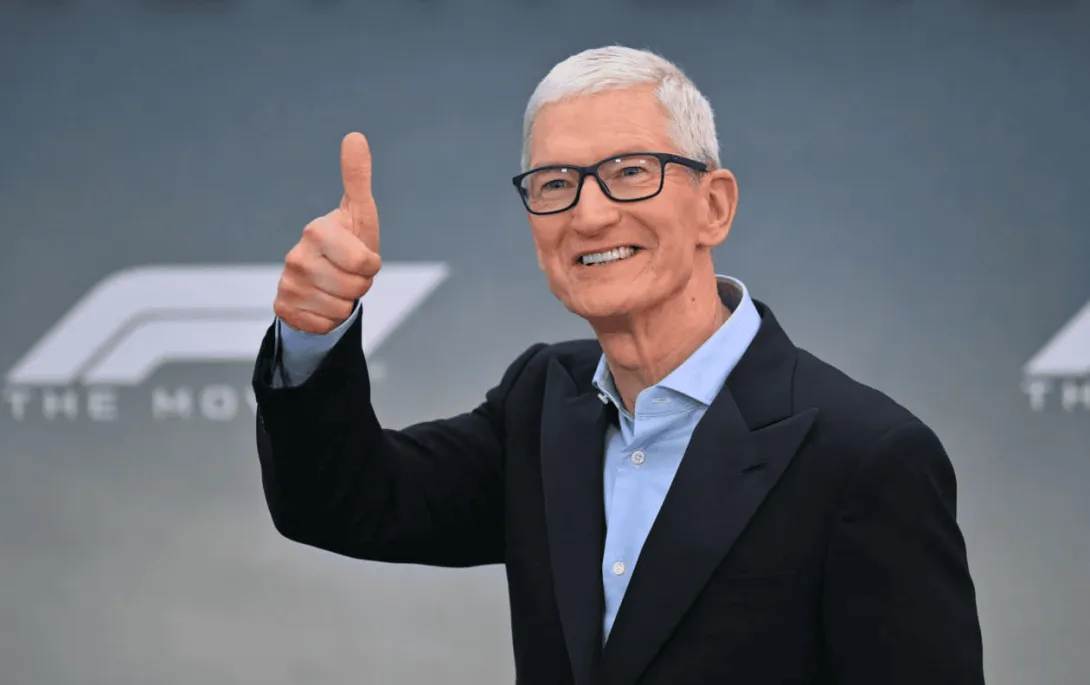
Nike's valuation has almost halved from its yearly highs and the stock is down by nearly 65 percent over the last five years. Despite the declining valuations, Apple CEO Tim Cook has invested more money in the footwear and sports brand. Tim Cook’s latest move in the equity markets offers a telling glimpse into the conviction of one of the world’s most closely watched corporate leaders. The Apple chief executive, who also serves on Nike’s board, has deepened his personal investment in the global sportswear giant with a fresh $1 million stock purchase. The timing is notable—coming amid intensifying competition and a leadership transition at Nike—suggesting that Cook sees long-term value where others may see uncertainty. For investors, such insider buying often carries weight, signaling confidence rooted in privileged strategic visibility.
Tim Cook Deepens Commitment to Nike’s Long-Term Growth
Tim Cook has once again reinforced his belief in Nike by acquiring an additional $1 million worth of company shares. This move is far from symbolic—it builds upon an already substantial personal stake, underscoring a consistent and deliberate investment strategy aligned with long-term value creation. Cook’s decision reflects more than passive confidence. As a key figure with intimate exposure to Nike’s internal strategy, his capital allocation speaks volumes. Unlike external investors who rely on public disclosures and market sentiment, Cook operates with a nuanced understanding of operational priorities, innovation pipelines, and growth initiatives. His willingness to increase exposure during a period of market friction suggests a belief that Nike’s current challenges are transitional rather than structural.
Insider Confidence Amid Intensifying Industry Competition
The global sportswear landscape has evolved rapidly, with emerging brands capturing consumer attention through niche positioning and digital-first strategies. This has placed pressure on legacy players like Nike, leading to short-term sales fluctuations and heightened competitive intensity. Yet Cook’s investment comes precisely at this inflection point. Rather than retreating, he has chosen to lean in—an approach often associated with seasoned investors who recognize dislocation as opportunity. His purchase signals that, despite external headwinds, Nike’s core fundamentals—brand equity, innovation capacity, and global distribution—remain intact. As Nike’s lead independent director, Cook is uniquely positioned to assess the company’s response to these pressures. His continued financial commitment implies confidence in both strategic recalibration and execution capability.
Leadership Transition: A Critical Catalyst for Investor Sentiment
A central factor shaping Nike’s near-term outlook is its ongoing leadership transition. The appointment of Elliott Hill as chief executive marks a pivotal moment for the company, as it seeks to regain momentum and sharpen its competitive edge. Cook’s decision to invest during this transition phase is particularly significant. Insider buying at such moments is often interpreted as a vote of confidence in incoming leadership and strategic direction. Markets tend to scrutinize these signals closely, as they provide insight into internal expectations that may not yet be reflected in financial performance. For everyday investors, Cook’s move serves as a powerful endorsement of Nike’s leadership shift. It suggests that the board—armed with detailed operational insights—believes the company is positioned for a meaningful turnaround.
Market Interpretation of Insider Buying Activity
In financial markets, insider transactions are rarely viewed in isolation. When high-profile executives deploy personal capital, it often carries broader implications for sentiment and valuation. Cook’s $1 million investment fits into a well-documented pattern where insider buying is interpreted as a bullish indicator. Unlike routine compensation-based share acquisitions, discretionary purchases signal intentional conviction. The scale and timing of such moves can influence institutional behavior, potentially triggering renewed interest in the stock. Moreover, Cook’s stature amplifies the signal. As the CEO of one of the world’s most valuable companies, his investment decisions are closely watched across global markets. His endorsement—implicit through capital commitment—adds credibility to Nike’s recovery narrative.
Strategic Takeaways for Investors
For investor-minded readers, Cook’s latest move offers several actionable insights:
- Insider conviction matters: Large, discretionary purchases by informed insiders often precede improved performance or strategic breakthroughs.
- Transitions create opportunity: Leadership changes, while initially uncertain, can reset operational momentum and unlock value.
- Long-term perspective is key: Cook’s continued accumulation suggests a belief in Nike’s enduring competitive advantages, despite short-term volatility.
Ultimately, this development reinforces a broader principle in investing: when those closest to a company’s inner workings increase their exposure, it is rarely without reason. Cook’s move may not guarantee immediate upside, but it strengthens the case for Nike as a long-term play in a dynamic and evolving industry.
Comments