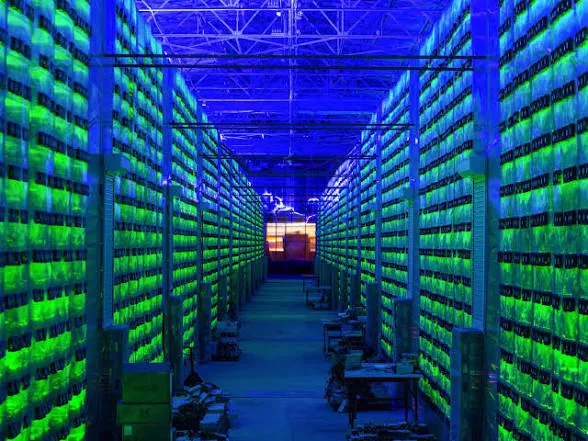
Crypto mining remains a cornerstone of the blockchain ecosystem, enabling transaction validation and the creation of new digital assets. In 2026, the industry is undergoing a structural transformation driven by rising energy costs, tighter regulatory oversight, and rapid advancements in mining hardware efficiency. While large-scale industrial mining operations continue to dominate profitability, small independent miners face shrinking margins and increasing barriers to entry. Environmental concerns are also reshaping the sector, pushing companies toward renewable energy solutions. Despite volatility, crypto mining remains strategically significant within the broader digital economy, reflecting both the promise and challenges of decentralized financial infrastructure in a maturing market.
Understanding Crypto Mining in the Modern Digital Economy
Crypto mining is the computational process through which transactions are validated and recorded on blockchain networks. It also serves as the mechanism for introducing new digital currency units into circulation. At its core, mining relies on specialized hardware solving complex cryptographic puzzles, securing decentralized systems without central authority intervention.
Over the past decade, mining has evolved from a hobbyist activity into a highly industrialized global industry dominated by large data-center-scale operations.
Rising Costs and Shrinking Margins
One of the defining characteristics of the current mining landscape is escalating operational costs. Electricity consumption remains the single largest expense, and in many regions, tariffs have increased significantly. This has reduced profitability for individual miners and forced many out of the market.
Industrial miners, however, continue to maintain an advantage by securing long-term energy contracts and relocating operations to regions with cheaper electricity. The result is increasing centralization, where a small number of large entities control a majority of mining power.
Technological Advancements and Efficiency Gains
Mining hardware has seen substantial improvements, particularly with next-generation Application-Specific Integrated Circuits (ASICs). These machines deliver significantly higher hash rates while consuming less energy per computation.
Efficiency has become the primary battleground of competition. Companies that fail to upgrade infrastructure risk obsolescence as network difficulty increases and older hardware becomes unprofitable.
Cloud-based mining solutions have also emerged, allowing users to participate without owning physical equipment, though returns are often lower after service fees.
Environmental Concerns and Regulatory Pressure
Environmental sustainability has become a central issue for the crypto mining sector. Critics argue that large-scale mining consumes excessive electricity, contributing to carbon emissions in fossil-fuel-dependent regions.
In response, many operators are shifting toward renewable energy sources such as hydro, solar, and wind power. Governments are also tightening regulations, introducing licensing frameworks, taxation policies, and in some cases, restrictions on energy-intensive mining activities.
This regulatory environment is reshaping where and how mining operations are established globally.
Market Volatility and Investment Risk
Crypto mining profitability is closely tied to the price of digital assets. Sudden market downturns can quickly turn profitable operations into loss-making ventures. This volatility introduces significant financial risk, especially for operators with high fixed costs.
As a result, mining is increasingly viewed as a sophisticated investment activity rather than a speculative entry-level opportunity. Institutional players now dominate strategic decision-making, employing risk hedging and long-term asset accumulation strategies.
The Future of Crypto Mining
Looking ahead, crypto mining is expected to become more concentrated, energy-efficient, and regulated. The industry is likely to continue shifting toward large-scale operations integrated with renewable energy infrastructure.
At the same time, innovation in blockchain protocols—such as proof-of-stake systems—may reduce reliance on traditional mining altogether for certain networks. However, for proof-of-work systems, mining will remain an essential backbone of decentralized security.
Conclusion
Crypto mining in 2026 reflects a mature but highly competitive ecosystem shaped by economics, technology, and policy. While opportunities still exist, especially for industrial-scale players, the era of easy profitability has largely passed. The sector now demands strategic planning, technological sophistication, and strong capital backing to remain viable in an increasingly demanding digital financial landscape.
Comments