Altcoins—cryptocurrencies developed as alternatives to Bitcoin—have evolved into a diverse and rapidly expanding segment of the digital asset market. While Bitcoin continues to dominate headlines and market capitalization, thousands of altcoins now serve specialized purposes, from enabling decentralized finance to facilitating fast global payments. These assets vary widely in design, risk, and utility, offering both innovation and uncertainty. As the crypto ecosystem matures, altcoins are increasingly shaping its future trajectory. However, their volatility, fragmented liquidity, and uneven credibility demand careful evaluation from investors navigating this complex financial frontier.
What Are Altcoins and Why They Matter
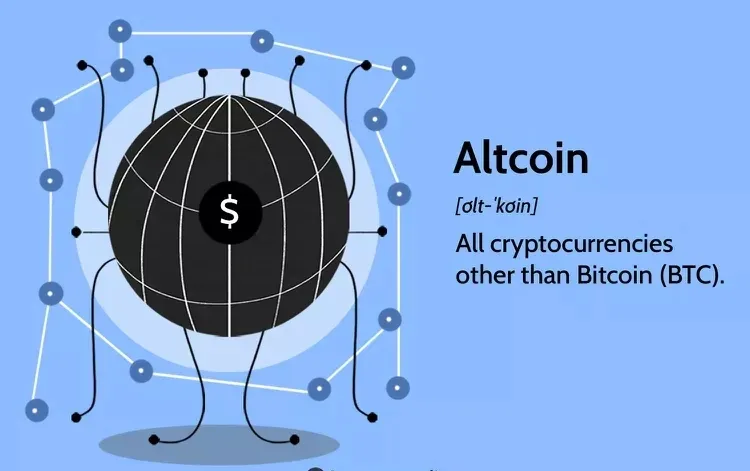
Altcoins, a term derived from “alternative coins,” refer to all cryptocurrencies other than Bitcoin. In some interpretations, even Ethereum is excluded due to its scale and influence. These digital assets are typically developed to address perceived limitations in Bitcoin’s architecture or to introduce entirely new functionalities.
Unlike Bitcoin, which primarily functions as a decentralized store of value, many altcoins are purpose-built for specific applications. They operate on their own blockchain networks or are derived from existing ones through processes such as forking, where developers modify an existing protocol to create a new version with distinct features.
Categories of Altcoins: A Fragmented Yet Innovative Landscape
The altcoin ecosystem is far from uniform. Instead, it comprises multiple categories, each serving a unique economic function.
Payment tokens aim to facilitate peer-to-peer transactions, mirroring Bitcoin’s original use case. Meanwhile, stablecoins attempt to reduce volatility by pegging their value to traditional assets such as fiat currencies or commodities.
Utility tokens power blockchain ecosystems by enabling users to access services or pay transaction fees. For instance, Ether is used to execute operations within the Ethereum network. Security tokens, on the other hand, represent ownership in real-world assets and are often subject to regulatory oversight.
More speculative segments include meme coins, driven largely by online sentiment, and governance tokens, which grant holders voting rights in decentralized protocols. Notable examples such as XRP demonstrate how altcoins can target institutional use cases like cross-border payments.
Advantages and Risks for Investors
Altcoins present compelling opportunities but also significant risks. On the positive side, they often introduce technological advancements or niche use cases that Bitcoin does not address. This innovation can translate into high growth potential, particularly for early adopters.
However, the market remains highly fragmented. Compared to Bitcoin, most altcoins have lower liquidity and smaller market capitalization, making them more susceptible to price volatility. Additionally, the absence of standardized valuation frameworks makes it difficult to distinguish fundamentally strong projects from speculative or even fraudulent ones.
The proliferation of “dead coins”—projects that have lost developer support or user interest—underscores the importance of rigorous due diligence.
Market Dynamics and Competitive Positioning
Despite the emergence of thousands of altcoins, Bitcoin continues to dominate the crypto market, often accounting for over 40% of total market share. This dominance highlights a structural imbalance: while innovation thrives in the altcoin space, investor confidence remains concentrated in established assets.
That said, certain altcoins have carved out durable niches. Ethereum leads in decentralized applications, while XRP focuses on institutional payment solutions. Stablecoins such as USDT and USDC have become essential liquidity instruments within trading ecosystems.
This layered structure suggests that the market is unlikely to converge around a single dominant alternative. Instead, it may stabilize around a handful of high-utility assets that demonstrate resilience, scalability, and regulatory adaptability.
Future Outlook: Consolidation and Maturity
Looking ahead, the altcoin market is expected to undergo gradual consolidation. While thousands of tokens currently exist, only a fraction are likely to survive long term. Projects with clear use cases, robust governance, and strong developer ecosystems are best positioned to endure.
The broader crypto industry is still in a formative stage, resembling early financial systems where multiple currencies coexisted before standardization emerged. As regulatory frameworks evolve and institutional participation increases, altcoins may gain legitimacy—but also face stricter scrutiny.
Conclusion
Altcoins represent both the promise and the complexity of the cryptocurrency revolution. They extend the boundaries of blockchain technology, offering innovative solutions across finance, governance, and digital infrastructure. Yet, their diversity also introduces fragmentation and risk.
For investors, the appeal lies in potential upside and diversification. However, success in this space requires disciplined research, strategic allocation, and a clear understanding of underlying fundamentals. In a market defined by rapid change, prudence remains the most valuable asset.
Comments